
To grow in football and futsal, we must embrace global expertise and raise our coaching standards.
Football and futsal are rising in popularity across Australia, yet the way we approach coaching and professionalism still lags behind the world’s leaders. This is not about dismissing what we have achieved so far, but about acknowledging that to truly progress, we must be willing to learn from those who have shaped the game on a global scale. At present, our top structures whether it be the A-League, the Socceroos, the Futsalroos or other elite programs remain dominated by homegrown coaching teams. While this reflects the dedication of many passionate Australians, it also highlights a lack of foresight.
Our direct competitors in Asia, nations like Japan, Thailand and even India have actively recruited South American and European coaches to raise standards within all levels (from juniors through to seniors) of their programs, and the benefits are clear in their technical growth and international competitiveness. Japan provides a perfect example: in the 1990s they brought in Brazilian futsal coaches to help shape their development system, and today Japan is recognised as one of the most technically skilled football and futsal nations outside South America. Thailand followed a similar path, embedding Spanish and Brazilian coaches into their programs, and they are now consistently competitive on the world stage in Futsal and at a high level in the youth football world. Thailand have currently many international coaches in high level teams including the national team set ups. Australia, on the other hand, often seems reluctant to look outward. This stubbornness, whether driven by pride, money or a desire to protect local pathways, and local jobs, risks stifling the game’s development. The results speak for themselves, despite our talent pool and passion, we are not keeping pace with nations that have embraced international expertise. If we want to close the gap, we must accept that progress will not come from isolation, but from collaboration with the wider football world.
As Always, we understand that financial investment may be the key.
Lessons From Brazil
Brazil is perhaps the clearest example of what a true football and futsal culture looks like. The game is everywhere. Children play in the streets, in the parks, and on small futsal courts where they are forced to improvise. Every part of the body becomes a tool to control the ball. The step-over, the flick, the feint, these are not seen as showing off, as they often are in Australia, but as expressions of creativity and artistry.
When children progress into academies, structure is introduced, but the freedom to express themselves is never taken away. The balance between discipline and creativity produces players who are both effective and exciting. Watching futsal in Brazil feels less like watching a sport and more like watching a performance, where skill and imagination are celebrated as much as the result.
Nutrition and physical preparation play a critical role as well. Young players in South America eat with intent. Plates are filled with beans, rice, vegetables and proteins that fuel their bodies for growth and performance. The difference is visible. At youth tournaments I have attended, Brazilian, Paraguayan and Colombian players consistently appeared stronger, faster and more physically developed than their Australian, European and North American counterparts, who were often more selective and limited in their diets. While this is a general observation, it has been reinforced across many competitions and age groups. Habits established early become part of the game as players grow older. Success at the highest levels demands proper preparation, disciplined eating and maintaining peak physical condition all year round.
Coaching: The Area We Must Transform
The biggest gap, however, is not on the court it is on the sidelines.
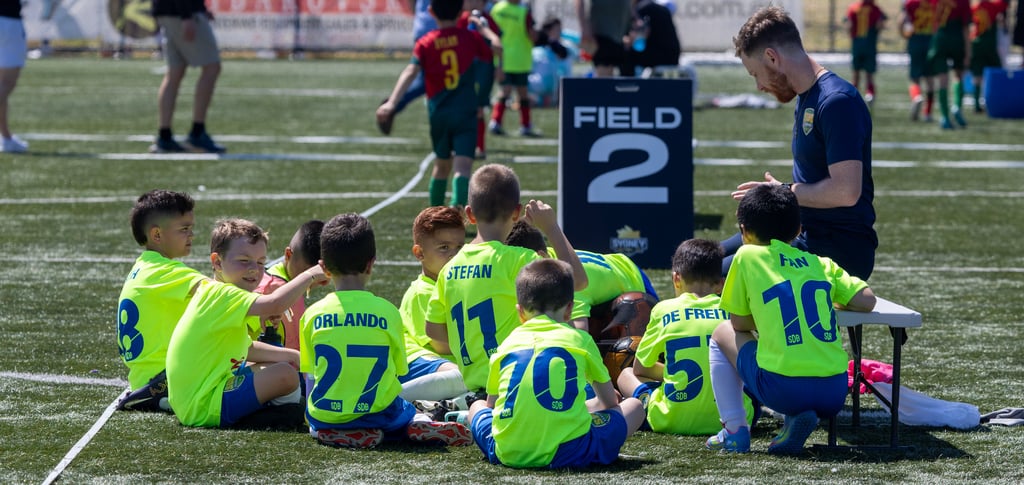
In Brazil, even at youth level, teams are led by professional coaching units. There are multiple assistants, goalkeeper coaches, physiotherapists and fitness staff. Coaches arrive in uniform, carry tactical boards, present themselves with authority and prepare their teams with clarity. They are animated, passionate and demanding, but they communicate with respect. The message to young athletes is simple: their development matters.
In Australia, we often see the opposite. Too many coaches arrive without uniforms, without tactical boards, and without professional posture. The impression given to players is that this is a hobby, not a profession. It is here that we must change the most. Coaching must grow not only through courses, but through collaboration with international professionals who have lived and breathed the game in footballing nations. If our coaching standards do not rise, our game will never reach the top.
Governing bodies and state federations must lead this change. Greater emphasis must be placed on coaching standards, and significantly more financial investment is needed. Without strong, well-resourced coaches, we cannot expect our players to develop into the professionals we hope for.
The Role of Parents
Parents play an important part in shaping the culture of football and futsal. In Australia, too many junior games are decided by size, aggression or long balls. These tactics may win matches on the day, but they do very little to develop a child’s skills for the future. The responsibility of parents is not to chase short-term success by moving from club to club or team to team in search of results. Instead, parents should be asking: what is the coaching philosophy here? What is the structure in place to help my child learn? Is the coach focused only on winning, or are they teaching technique, building mental resilience and preparing players for long-term growth?
Winning an under-12 match does not define a footballer. Development takes years of patience, structure and creativity. The easy wins are not the ones that build better players. The real value comes when young players are given the chance to make mistakes, learn from them and grow into more complete athletes and people.
In Europe and South America, parents understand this balance. They support from the stands but allow their children to take responsibility on the pitch. They do not interfere with the process. Coaches are trusted to focus on building players, not just chasing wins. This independence helps children mature earlier, learn to make their own decisions and develop the confidence that shows in their game.
Asia is Already Moving Ahead
It is not just South America and Europe setting the benchmark. Asia has already embraced international expertise. In Thailand, Japan and even India, South American and European coaches are embedded in clubs and academies. They lead training sessions, run professional programs and bring with them the standards that help young players grow.
The results are clear. These nations are progressing at a faster rate than Australia. They are narrowing the gap on the world stage while we risk falling further behind. As mentioned earlier, the role of Brazilian coaches by Japan in the 90’s is now showing the results.
A Personal Perspective
I speak from first-hand experience. I have travelled extensively to observe football and futsal in Brazil, Europe and Asia. I have visited clubs and academies, spoken with lead coaches, and studied how programs are structured at every level. The professionalism, passion and clarity I have witnessed overseas is on another level. It is not just about the tactics; it is about the culture, the discipline, the environment and the respect for the game.
In Australia, we have the talent and the passion. But without broadening our vision, without drawing on the global nursery of expertise, we will remain limited.
Where To From Here?
The answer is not to abandon our strengths. It is to add to them. We need to bring in professionals from South America and Europe to complement our pathways. We need to invest in coaching as a profession, not a pastime. We need to encourage young players to be creative and independent, to embrace flair rather than suppress it.
Most importantly, we need to accept that our game is part of the global game. We cannot grow in isolation. We must learn, adapt and collaborate if we want our players to reach their potential.
Australia does not lack talent. What we need is vision. The time has come to change direction and open ourselves to the wider world of football and futsal. Only then will our game flourish.
Connecting you to professional opportunities globally.
Contact
info@gingaglobalgroup.com
+61 414 580 591
Ginga Global Group © 2025 • Certified Headlines